Part of our job as designers is to follow and spot market trends. It’s a skill that facilitates the delivery of successful, market-ready products, and understanding the ways in which industries are shifting and transitioning is essential.
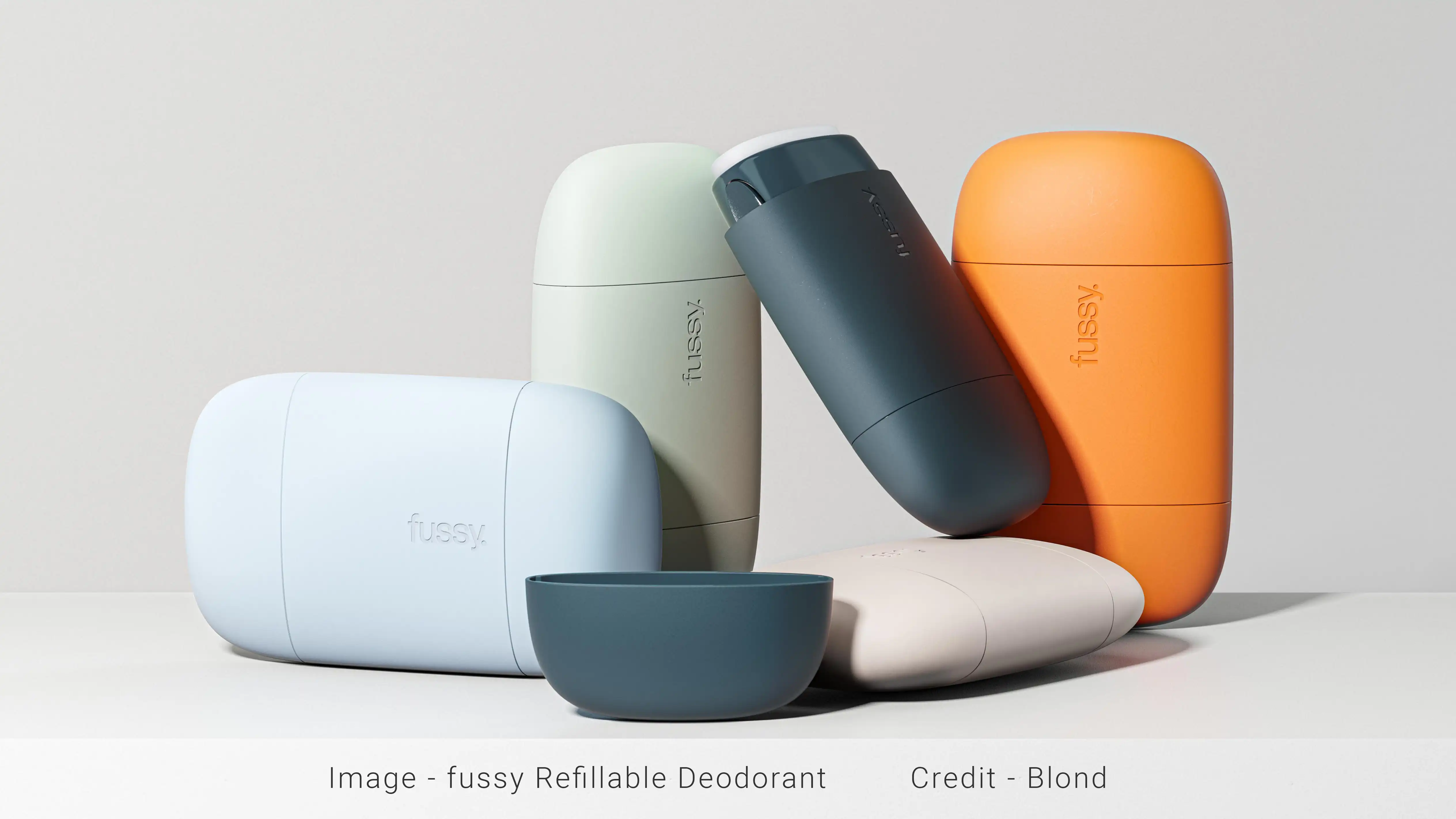
One example of this that we’ve been following closely is in personal care, specifically deodorant. In recent years, we have seen the wildly successful launches of brands such as Wild and Fussy, which offer an infinitely reusable core durable product, designed to hold consumable refills. In recent weeks, we have also seen Dove launch a reusable competitor product in the UK, following the launch of a similar product for the US market in 2021. This amounts to a clear industry pivot towards reusables.
There are some clear and obvious advantages for both consumers, and brands here:
For brands, this model can enhance brand loyalty; when a user takes the initial decision to purchase the main container, they are then more likely to continue using the product as they are somewhat tied in to purchasing the refills, generating sustained, indefinite sales for the brand. It also gives brands the opportunity to take steps towards their climate and sustainability goals.
For consumers, despite initially paying a higher upfront cost for the cases, refills are generally more affordable when compared to single-use sticks or sprays. This is compelling for users, as it is an easy, attractive switch even for those not particularly concerned with the amount of plastic waste that they use.
In general, this is a good, progressive transition, and this is a clear consumer demand that these products are catering to. In addition to launching a product through Dove, last year Unilever acquired Wild, adding it to a portfolio that includes other personal care big hitters Lynx, Sure and Simple. Clearly, the bigger brands have also taken note of this shift, and are also conscious of ways in which they can meet their sustainability targets. This sale has caused some accusations of greenwashing to be levied at Unilever. Critics argue that instead of adopting more sustainable, plastic-reducing practices in their other lines (such as Lynx and Sure), they have instead chosen to launder their reputation by buying a credible, market leader, in this sector.
Even in the refillable Dove product, the refill cartridges are made of Post Consumer Recycled (PCR) polymer, rather than cardboard as with Fussy and Wild. Despite positioning itself as a market leader in reducing plastic, with a motto of “less plastic, better plastic, no plastic”, Unilever has consistently missed its plastic reduction and recycling targets*,has been subject to a Greenpeace investigative report, and an investigation by the UK competitions and market watchdog (CMW) into its misleading eco-credentials. Putting ulterior intentions aside, this pivot is still a net positive environmentally, and also for consumers, and this should be both lauded and encouraged.
The consistent thread that underpins all of this, is that start-ups and big brands alike are coming to understand that good industrial design is an effective, even essential, lever that they can pull to produce products that are desirable, lasting, and that people want to use and keep in their homes. And also one that distinguishes their product in the marketplace, giving it a distinct advantage over competitor products.
Just take a look at who designed the three previously cited products: Fussy was designed by Blond; Wild by Morrama; and the Dove product by PA Consulting; three of the most prominent design agencies in the UK. This is in opposition to consumable products, where the physical design is optimised almost wholly for cost, with graphics, packaging and advertising key to generating sales (aside from the actual quality of the deodorant product itself, of course).
While this is just in one sector, we predict that this trend will continue and expand across more consumer product markets. In a world in the midst of a climate crisis, plastic usage needs to fall, and despite the aforementioned watering down of targets, Unilever did still reduce their plastic use by 29% between 2019 and 2025, suggesting that reducing plastic usage is still the prevailing trend.
This means that objects are going to need to last us longer, and any purchase by consumers will inherently carry more weight and consideration as a result. Function, style and aesthetics in these products must appropriately befit this longevity, and attributing these qualities falls on us as designers and manufacturers of physical products.
This is where design as a success lever comes in, and while it absolutely proposes exciting opportunities and transitions for the industry, it also comes with responsibility. Responsibility to design products that last, yes, but also products that can be repaired; recycled at end of use; whose materials are derived from truly sustainable sources; use circular design principles; are ethically manufactured and procured, and also as designers and consumers to question if some products truly need to be brought into the world.
*In 2019, they set out a goal of reducing plastic waste in products by 50% by 2025. They have since revised that to 30% by 2026, and 40% by 2028. The Greenpeace report, released in 2023, found that at their current rate, they are on track to reach 50% by 2034, almost a decade late.