Prototypes are an invaluable tool in product development. They allow us as designers and engineers to validate our decision making across any stage, and any aspect of the development process. This article intends to explain some of the different types of prototypes, when it is appropriate and relevant to produce a prototype, and how using them helps to ensure successful physical product design projects.
Firstly, and most importantly, when, and why, do we need a prototype?
We utilise a prototype any time that we need to answer a question pertaining to a product’s development.
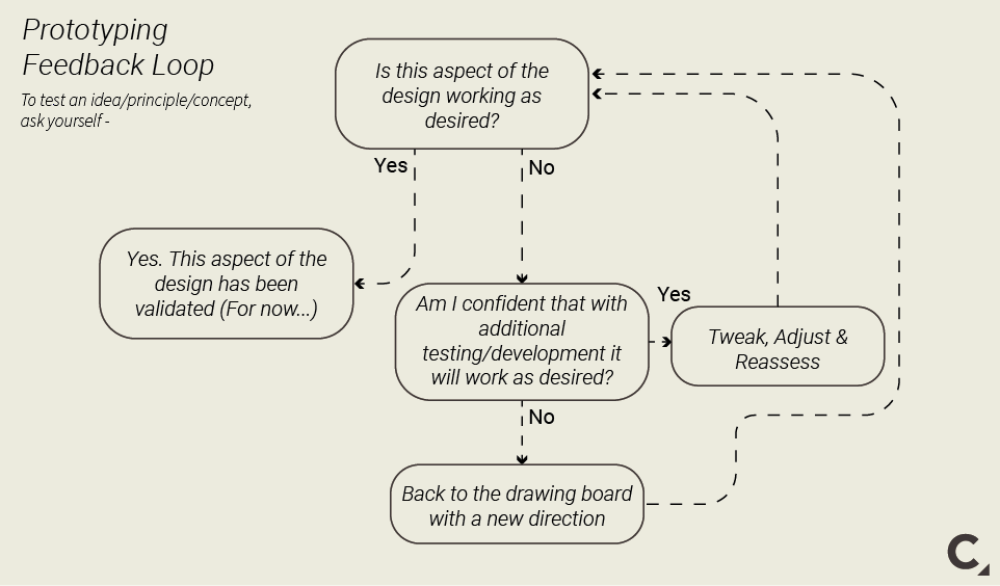
While the precise question we need to ask ourselves each time is different, it always essentially boils down to -
Does the current concept/route/mechanism/styling etc that I am on, work?
If yes, great. We have used our knowledge and experience to validate, and confirm, a given aspect of a design.
If it doesn’t work as intended, we need to ask ourselves - Do I have confidence that by making some adjustments, I can get this to work? If yes, we may make a change, and re-assess our thinking with another prototype.
If the answer is no, and we don’t feel confident in the direction, then we may be forced to reexamine the original stimulus, and propose an alternative direction.
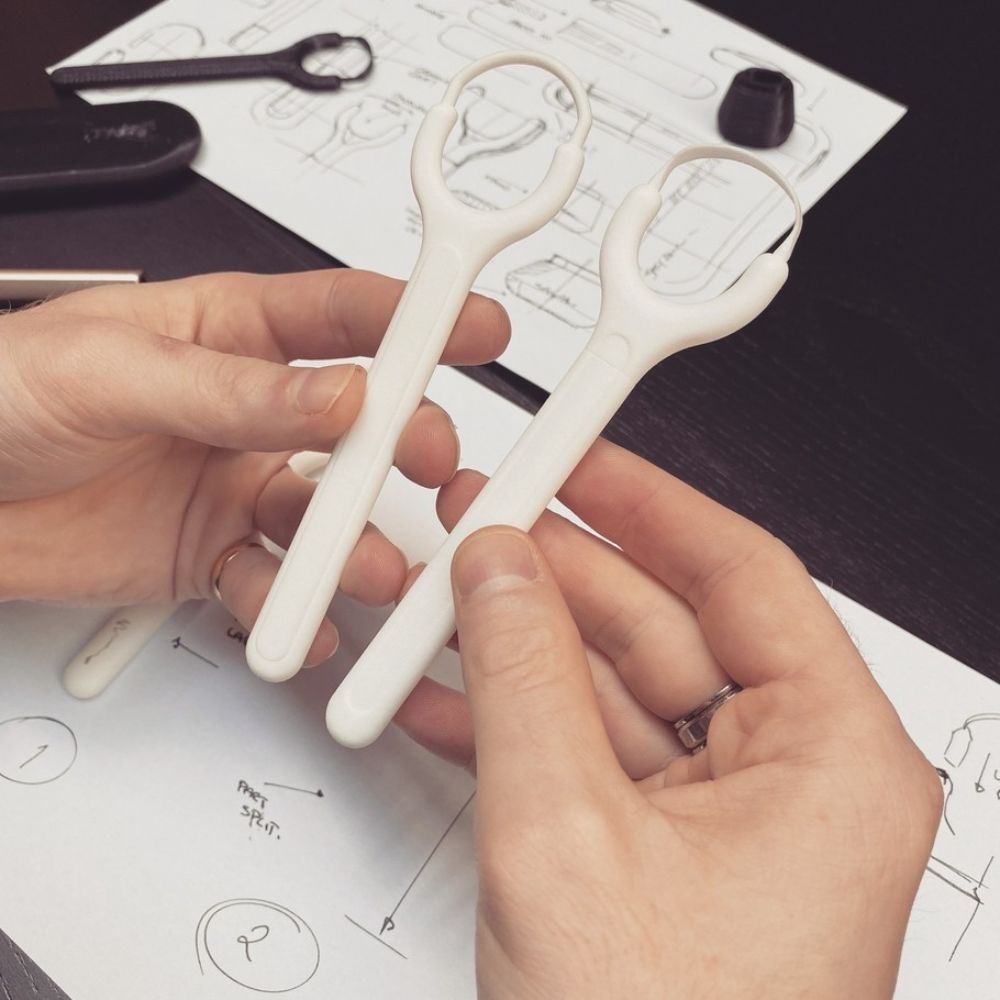
The most obvious example of this is when designing a mechanism. Take a sprung latch mechanism as an example. We might produce a quick, 3D printed prototype of our idea for the mechanism, and then ask ourselves
Does the latch work as intended? Is this easy to use? Does the tension on the spring feel correct? Is the size correct? And on, and on…
Mechanisms aren’t the only area in which we use prototypes though. In reality, any aspect of a product’s development can be assisted through the use of an appropriate prototype. From user experience, to aesthetics, to packaging, prototypes are an invaluable tool for designers to assess
Prototypes span even to a final pre-production model that a client might use to gain investment or sign off before commencing with tooling. The question is still essentially the same. Is this product suitable and fit for purpose in terms of aesthetics, function, ergonomics, marketing etc. Is some fine tuning required, or do we need to go back to the drawing board?
This is all well and good, but if prototypes can be used to test anything and everything, then how do projects ever get completed, with so many aspects to test and things to try? The truth is that over the course of developing a physical product, we are making hundreds and hundreds of different decisions. It would be simply impossible to test each one. Designers and engineers rely on their previously amassed knowledge and experience - and that of their colleagues and manufacturing partners - to move through design phases as effectively and efficiently as possible. We may test/prototype where decisions are unclear, or between project phases to validate the product as a whole, simultaneously testing many aspects at once.
On this point, CAD software is also arguably a prototyping tool, as it is used to rapidly work through feedback loops, posing and answering questions in pursuit of the optimum solution, in the same way as one might use prototyping.
This all starts to build a picture of why, when clients come to us (as they often do) saying ‘ I have a prototype, all I need is to get it manufactured ’, alarm bells ring in our head.
Not because prototypes aren’t useful, or because we discourage clients from coming to us with developed ideas, or even from having worked on a project with a different agency in the past. But because the term ‘prototype’ could refer to anything from an AI generated product image or a napkin sketch, to a fully working, aesthetically considered model, and everything and anything in between. The term is so broad that it can be confusing and misleading for clients, investors and consumers.
So, what are some of the different categories of prototypes that we might use, differentiated by different aspects of the development (software, mechanisms, user-interface etc), and the particular stage of the development (concept, engineering etc), and what is each useful for?
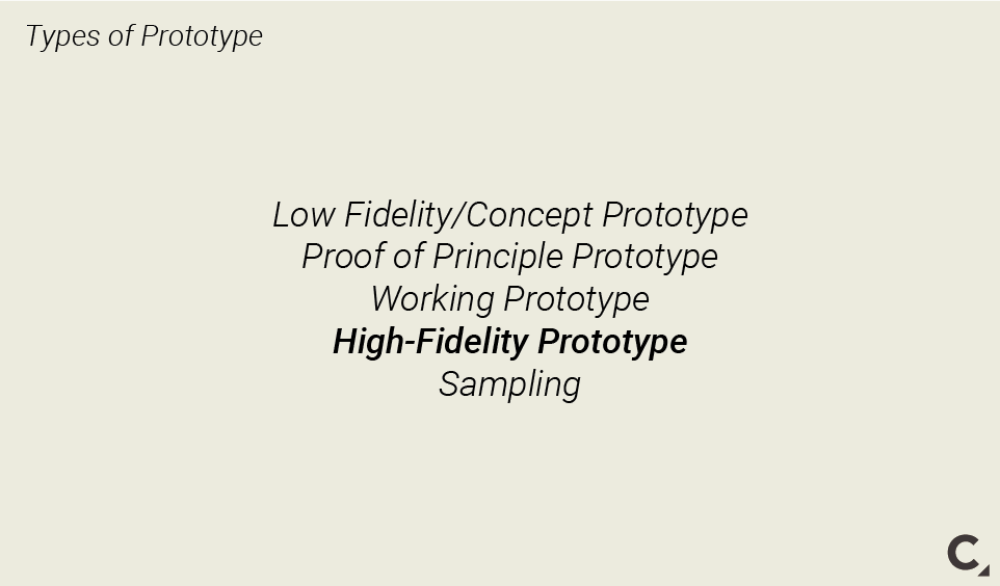
Low Fidelity/Concept Prototype
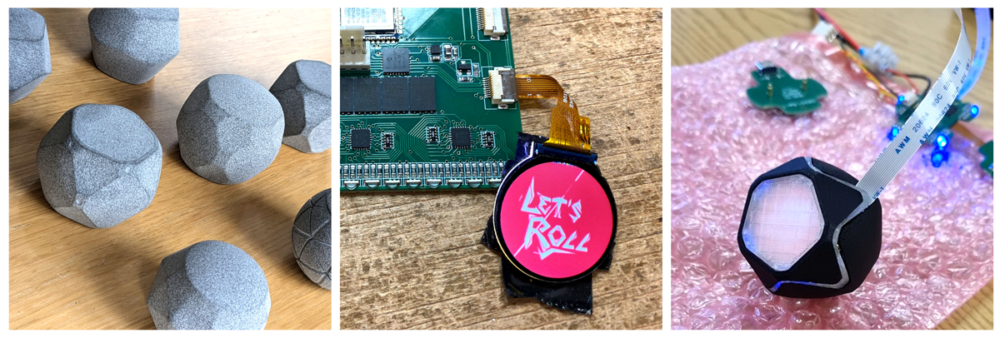
These prototypes are used to test a concept from the onset, and are often internal rather than client facing. They are often very rough and quick to put together. This may take the form of a scaled model, a 3D printed or foam-based form model, or even something constructed of rudimentary materials such as paper or card to assess aspects such as scale, form, or ergonomics.
Proof of Principle Prototype
These are similar in attitude to Concept Prototypes, but generally pertain specifically to mechanisms, software, or functional aspects of the design. This could include a test rig that can be used to run various tests and experiments, or a process whereby different aspects of the mechanical engineering, electronics, or software.
Working Prototype
Working prototypes are generally a culmination of rounds of low fidelity, and proof of principle prototyping, which produces a prototype that exhibits some, or all, of the functional aspects of a product. Up to this stage, hardware and software development and prototyping often run in parallel, before being assimilated beyond this point.
High-Fidelity Prototype
High-fidelity prototypes are units that aim to closely replicate the final production model in either some, or all, aspects. These may include form & finish models, fully functional prototypes, or both. Plastic parts are often machined, which gives the most realistic replication of injection moulded parts before getting units off the tool.
This is generally undertaken upon finishing engineering the product, but before beginning production tooling. It gives the engineering and design team a chance to fully review the design, and make any small adjustments before laying down tooling. For the client, it gives them an opportunity to get a representative production unit in their hands. This is invaluable for marketing purposes, and is also a requirement for most crowdfunding platforms, including Kickstarter.
Sampling
While not a type of prototyping, sampling is nonetheless an inherent part of developing a product for manufacture. Sampling is a multi-stage process undertaken after the tooling for a product has been laid down, and the units it produces are the very first production parts for a project.
T0 samples represent the very first units off the tool, and each successive stage (T1,T2,T3), is used to fine-tune, and evaluate, and improve aspects of a production part such as Tooling Aspects (Flash, Sink, Warping, Gate & Runner Positions, Ejector Pin Locations), Engineering Aspects (Dimensional Accuracy, Fit Checks, Wall Thickness), and also Aesthetic Aspects (Part Colour, texture, finishes). This involves the Engineering team working closely with the factory to solve problems, make decisions, and carefully develop the best solution.
This can often take several months of refinement, culminating in a “golden sample”, which is a production unit agreed upon by the client, and the factory as the standard at which production units must be delivered. Production, and ultimately delivery, of the order then proceeds from this point.
Hopefully this has given some insights into the use of prototypes as a tool that can be used to assist the development of physical product design, and shed some light on how and when they can be used throughout the design process.
If you have any questions on prototyping as a topic, or are curious as to how we may be able to help you develop an idea or prototype you have worked on into a production model, please get in touch. We’d love to hear from you.