At Centreline, we are always on the lookout for inspiration to stimulate and improve our creative process. In this spirit, here are some of our favourite Design and Engineering stories from the Milano-Cortina 2026 Winter Olympic and Paralympics.
Sustainable Firsts in Olympic Torch Design
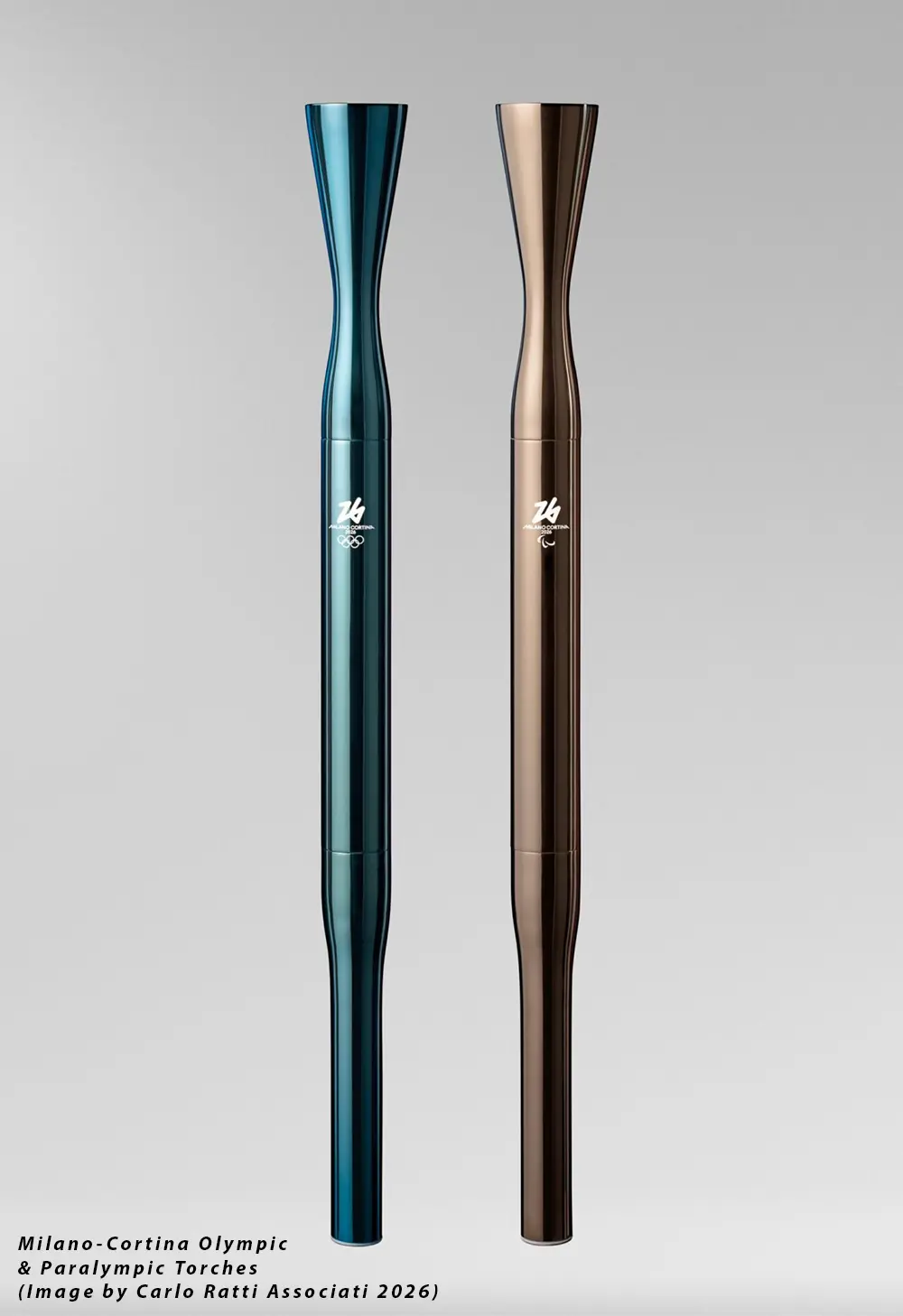
The Olympic torch is one of the key symbols of The Games, and its design embodies the spirit of the host city, as well as the historical significance of the moment. Sustainability is the guiding light in the design of the Milano-Cortina torches, starting with the name - "Essential". The focal point of any Olympic torch is the flame, and in line with its minimalist mantra, ornamentation and superfluous details have been stripped away to produce a clean form that emphasises function, and the beauty and renewability of the materials used.
In pursuit of this, recycled aluminium has been used for the exterior shell, and the design has been engineered to enable up to 10 uses; historically, torches have been single use. In addition, the high-performance burner uses feedstock derived from 100% renewable sources and features an open section that allows torchbearers and the public to view and understand the lighting mechanism.
The designs are finished in a gorgeous PVD coating that produces a reflective, iridescent effect intended to reflect and assimilate with the light and surroundings that it passes through on its journey from Athens. The torches have been made in Italy and aim to exude Italian excellence and craftsmanship.
An Inflatable Jacket by Nike ACG
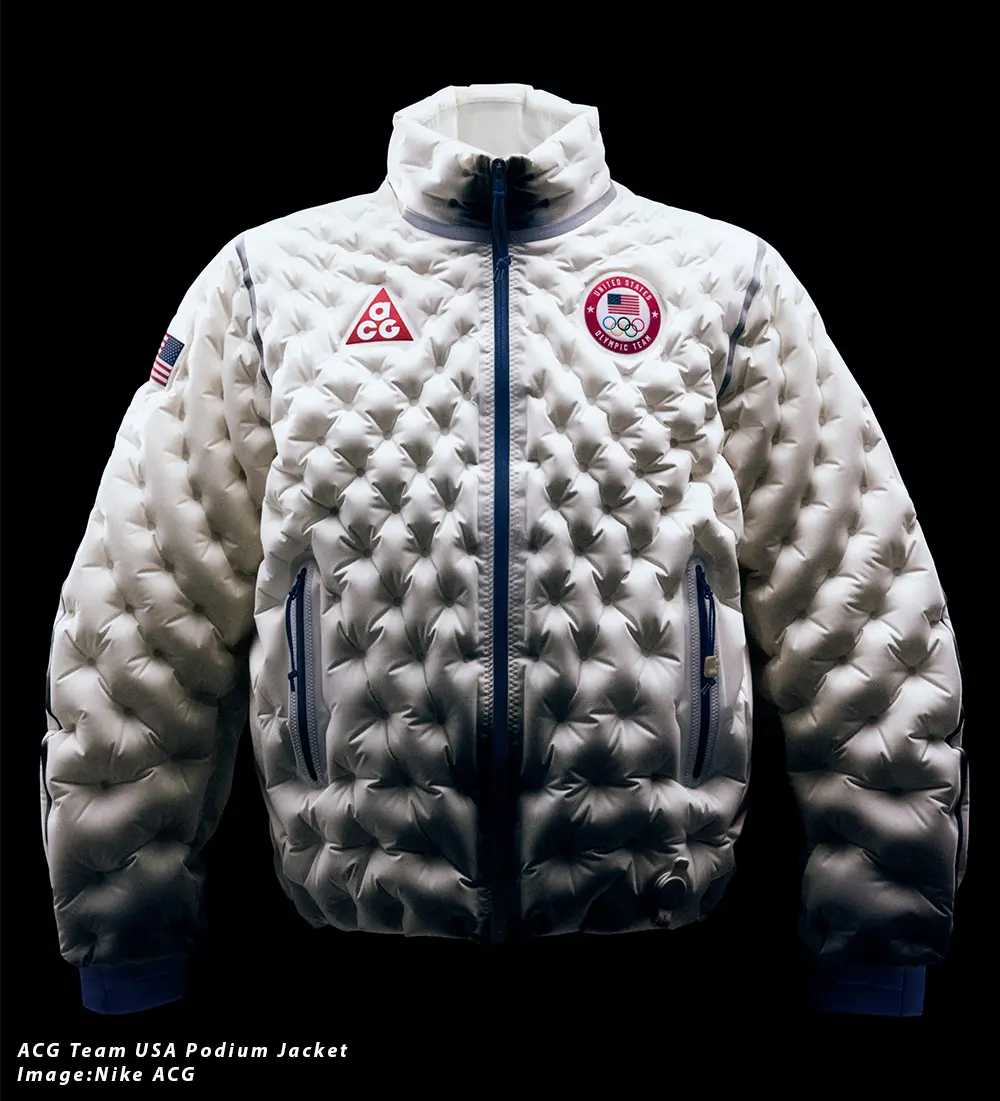
There were some incredible kit highlights on show at the Opening Ceremony (we particularly liked those of the Mongolian and Brazilian teams), however one item in particular stood out to our design team - the Nike ACG Air Milano jacket, which has been designed to inflate and deflate with air on command, and will be worn by Team USA during medal ceremonies. What may appear at first glance as a novelty or a gimmick is actually cleverly designed to solve a real problem - temperature regulation during exercise, especially in changeable, wintery conditions. Air has good insulating properties, and is obviously abundant, making it a perfect material choice for a warm puffer jacket. Furthermore, unlike traditional puffers, insulation is not lost if the jacket gets wet.
The jacket is inflated with a small battery powered fan that draws air in through a valve. Applying pressure to the valve then releases the air, turning the jacket into a light windbreaker. This shows some clever thought and engineering, and wrapping it in the rugged styling of Nike’s ACG range produces a truly inspiring piece of design.
3D Printed Bobsleigh Components
Additive manufacture is a versatile, rapidly growing area of manufacturing, and as a consultancy we have found it to be incredibly useful across a variety of the sectors we operate in. In terms of utilisation in sport, it has been used to design components in sports where ergonomics and aerodynamics are key factors in performance, including cycling, skating and shooting.
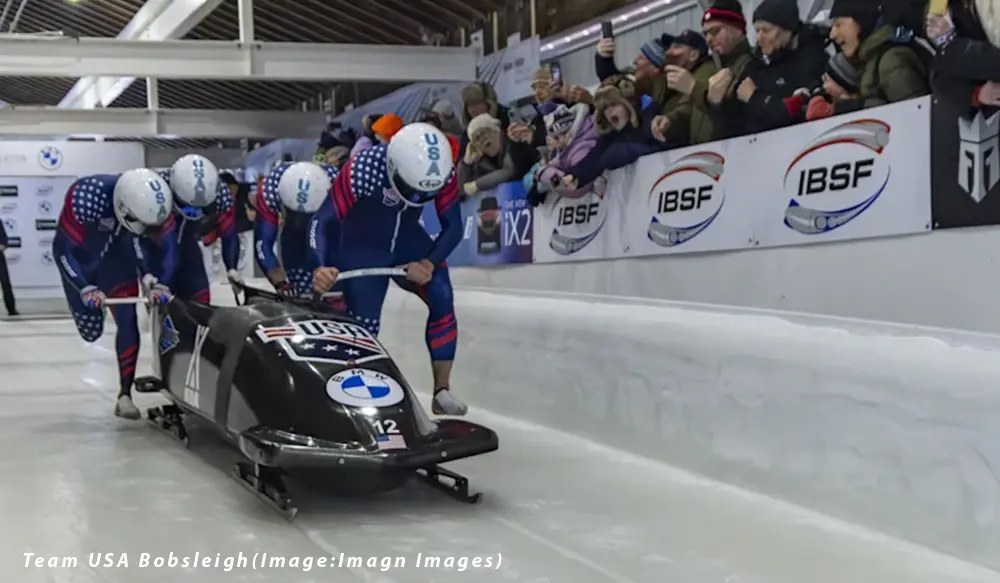
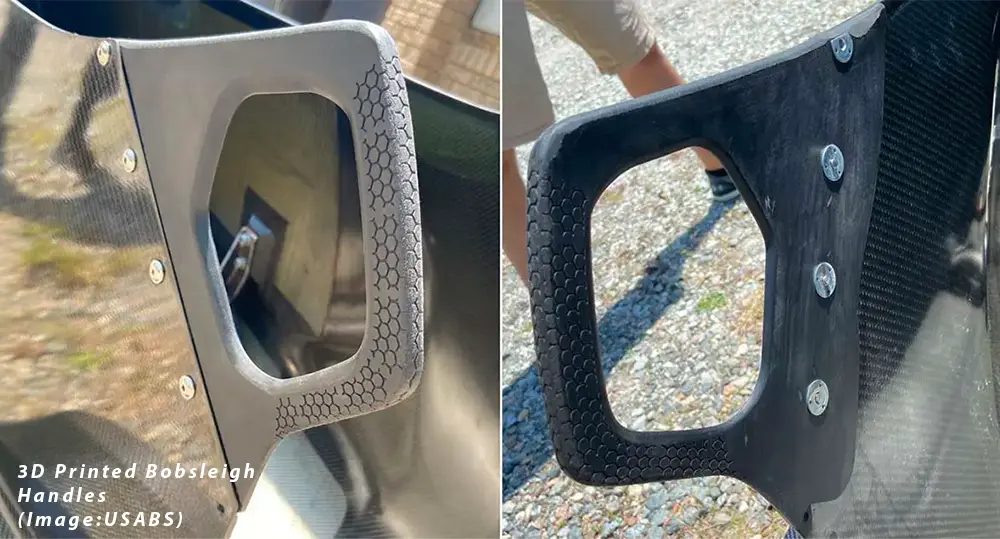
In anticipation of Milano 2026, Team USA’s bobsledders have used SLS 3D printing to develop handles designed to improve both performance and athlete safety. Bobsleigh is one of the most thrilling events in the Winter Olympic program, and success relies on a combination between physical effort, technical skill, and equipment design and engineering. The handles have been designed by US based company CRPUSA, using a carbon fibre filled composite polyamide. Key advantages over traditional manufacturing methods include eliminating the need for moulds, which enables rapid, unlimited iteration, reduced costs, and a faster lead time for competition-ready parts. The components can be ergonomically configured to individual athlete’s proportions, and the material is also flexible and stress resistant, reducing the risks of shattering during crashes, a key regulation that must be adhered to.
Skeleton Helmet Controversy
Sticking with the sliding sports, there was controversy with the British skeleton team in the days leading up to the opening ceremony, as their new helmet design was ruled as non-compliant, and was subsequently banned by the International Bobsleigh and Skeleton Federation just days before the event was due to start.
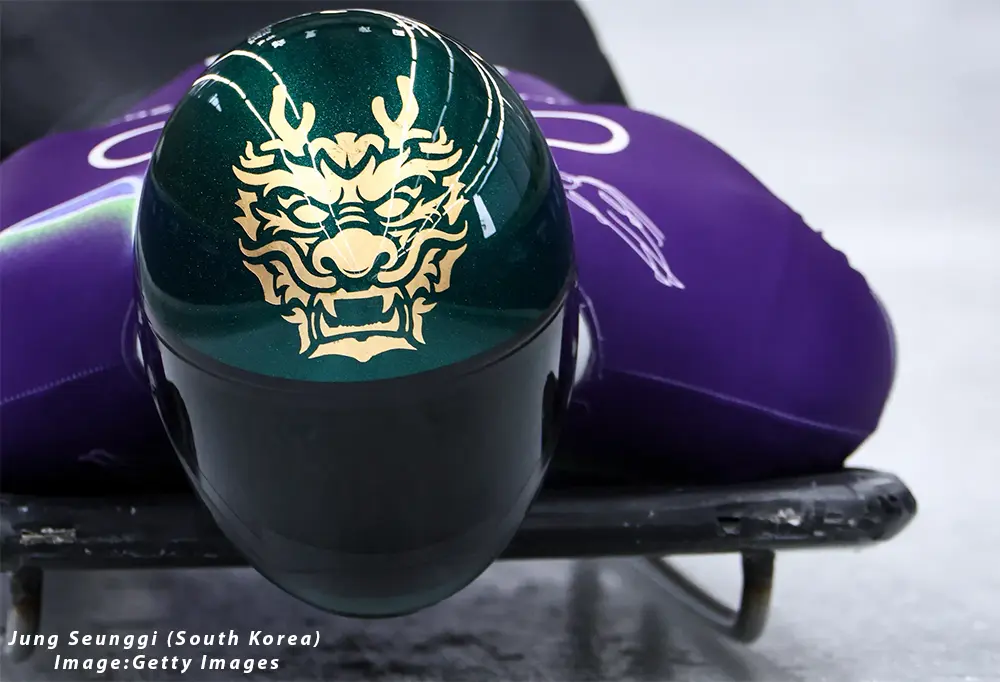
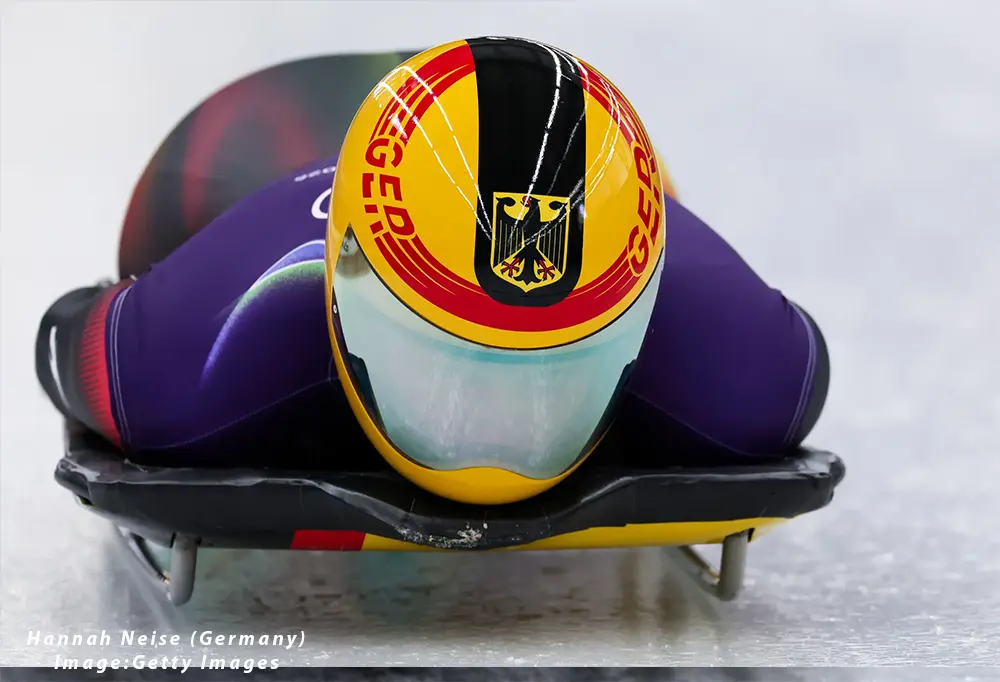
The British Bobsleigh and Skeleton Association argued that it fell within the regulations, as it had been manufactured without any elements attached to it, and had no aerodynamic modifications. In the ruling, the IBSF found that the helmet was a ‘departure from the standard shape’, possessing a significant rear protrusion, and contoured ridges, which were designed to ‘enhance aerodynamic performance’. Aside from this controversy, we found some incredible graphical design work elsewhere amongst the skeleton competitors.
Gustaf Westman Brings Curling Home
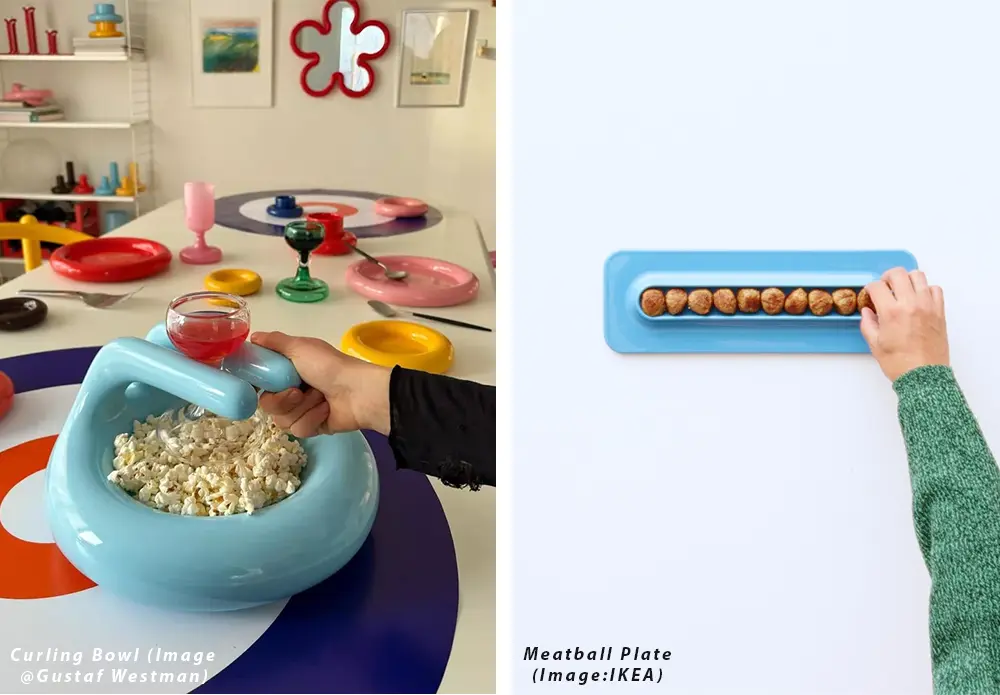
Gustaf Westman is a Swedish designer famous for his use of whimsical, pillowy forms, glossy finishes and pastel colours. Last year, he worked on a collaboration with IKEA, which included the ‘meatball platter’, a tray specifically designed to hold IKEA’s iconic meatballs. In celebration of Sweden’s victory against the USA in the mixed doubles curling event, he has shared ‘The Curling Bowl’, a curling stone-inspired snacking bowl in his trademark style, complete with a split handle designed to suspend a glass of wine.
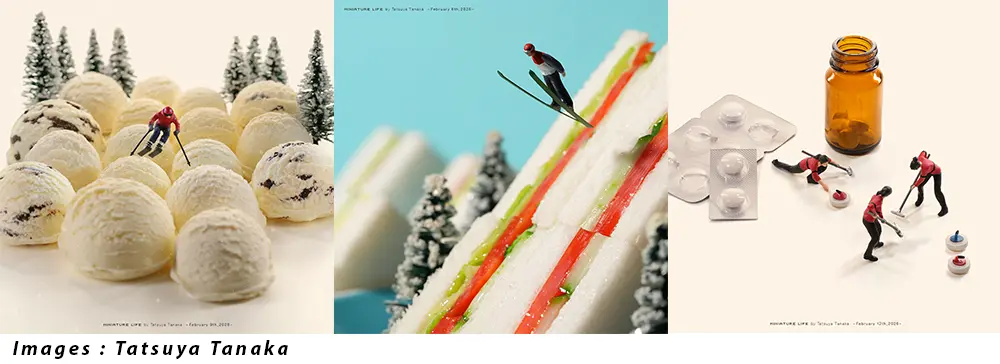
Miniature Olympic Themed Artwork by Tatsuya Tanaka
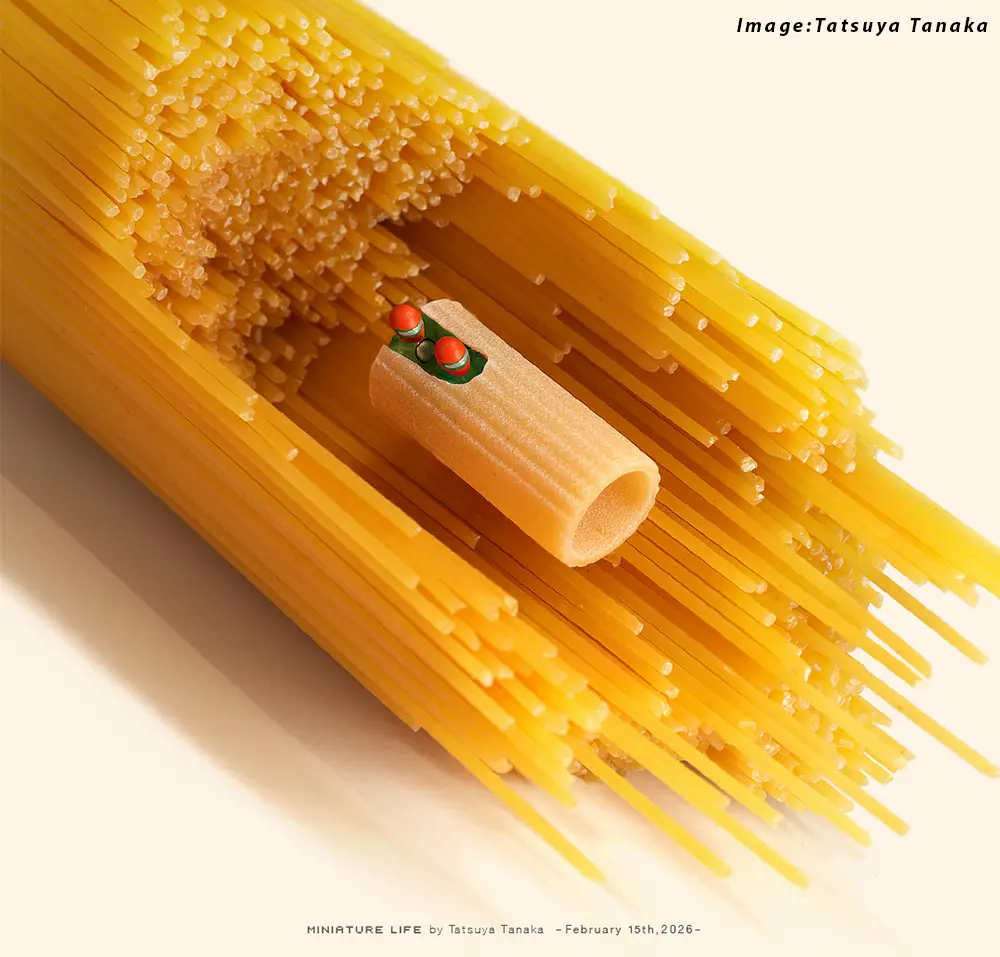
Finally, we also love these Winter Sport themed miniature artwork pieces by Japanese photographer Tanaka Tatsuya, who uses everyday objects and food to build these delightful scenes.
Established in 1984, Centreline is an award winning, design to manufacture focused consultancy, with studios located in London and Nottingham.
Contact us now to arrange a consultation; 01623 884300 or 0203 1764190