Not every project we undertake at Centreline starts on a blank page. We have extensive experience in picking up a great idea and making it real.
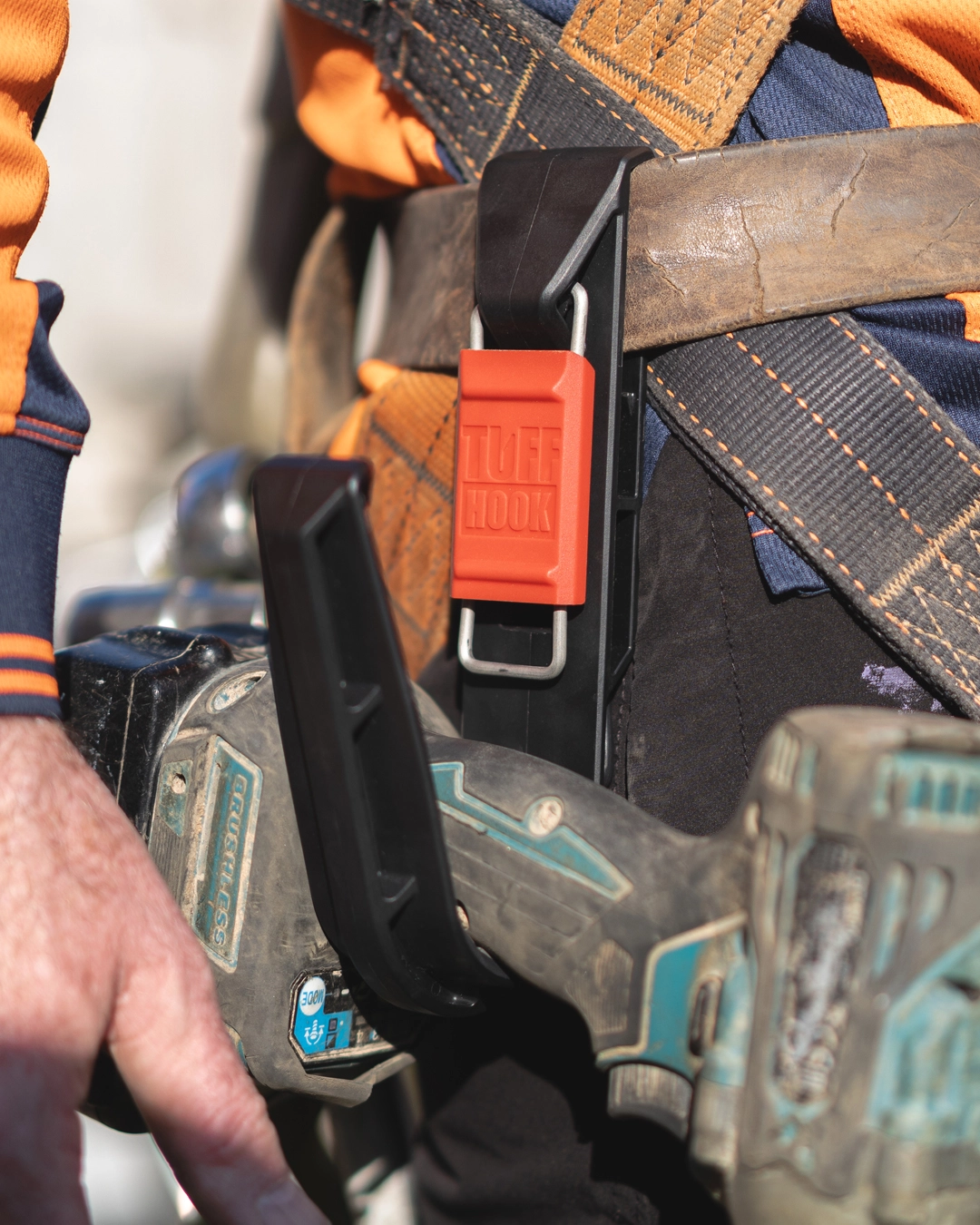
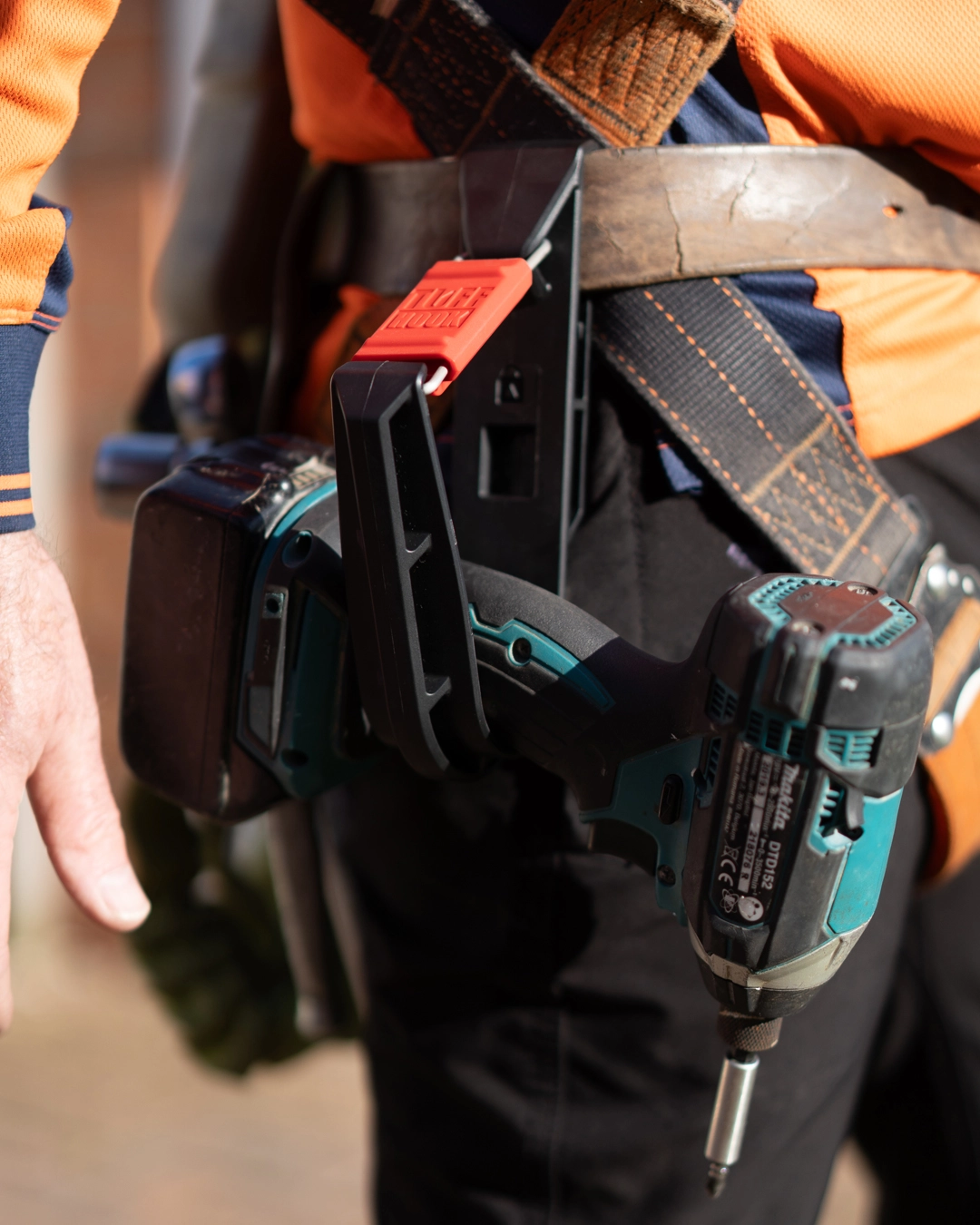
That was the case with Tuff Hook™ , a drill and impact driver holster designed for scaffolders. Jamie came to us with a working proof-of-concept and wanted us to take it from a design that works to one that survives the everyday interactions scaffolders have on a construction site.
The shape and function were already defined, so we focused on elevating the aesthetics to match the industrial design language scaffolders expect from their power tools. Scaffolders don't treat their gear gently, and neither did we in testing. We reworked the design to add support at key stress points, paired it with the right material spec, and pushed it through the most rugged testing we could throw at it.
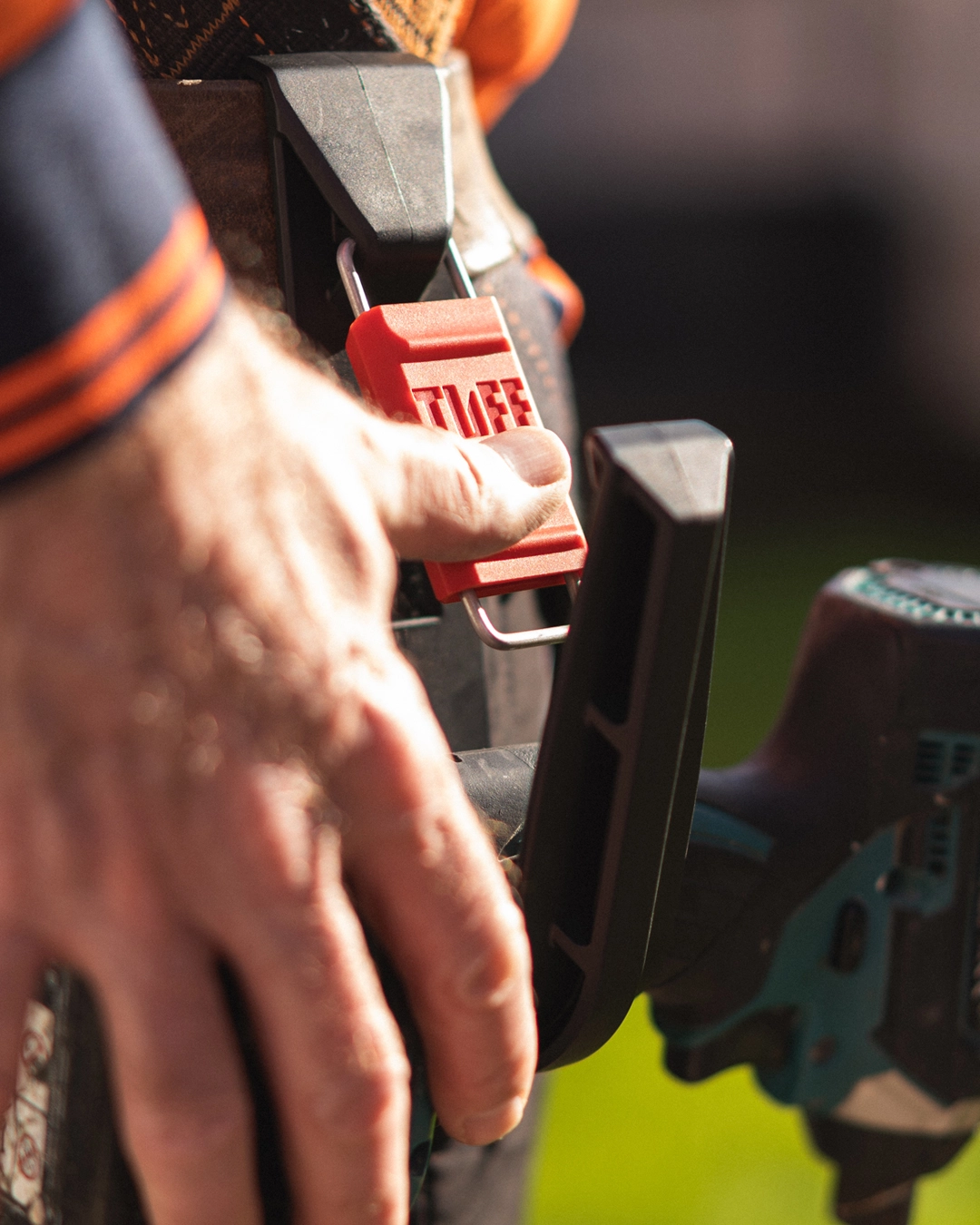
Where the Tuff Hook™ earns its place on a tool belt is through the quality of its user interaction. A spring-loaded gate lets the drill drop straight into the cradle and lock in place and can be held open for fast retrieval in more controlled settings. Every detail, from gloved-hand actuation to tactile, no-look locating features, was designed around the reality of the job.
Styling and strength matter, but it's these human factors, designed around how scaffolders actually work, that take Tuff Hook™ beyond anything currently on the market.
Here's a closer look at the refinement and engineering steps we took to take it from a proof of concept to production.
We began by reworking the design, so its look matched the quality of its engineering, bringing it up to a competitive standard in the market, both in aesthetics and engineering principles.
From there, we focused on the slider. Seeing as this was the key interaction that would define whether the hook made the scaffolders day to day easier, it was at the forefront of our refinement. We explored a range of forms, testing each with internal 3D prints, to find a shape that allowed users to lock and unlock the gate using the outside of their thumb.
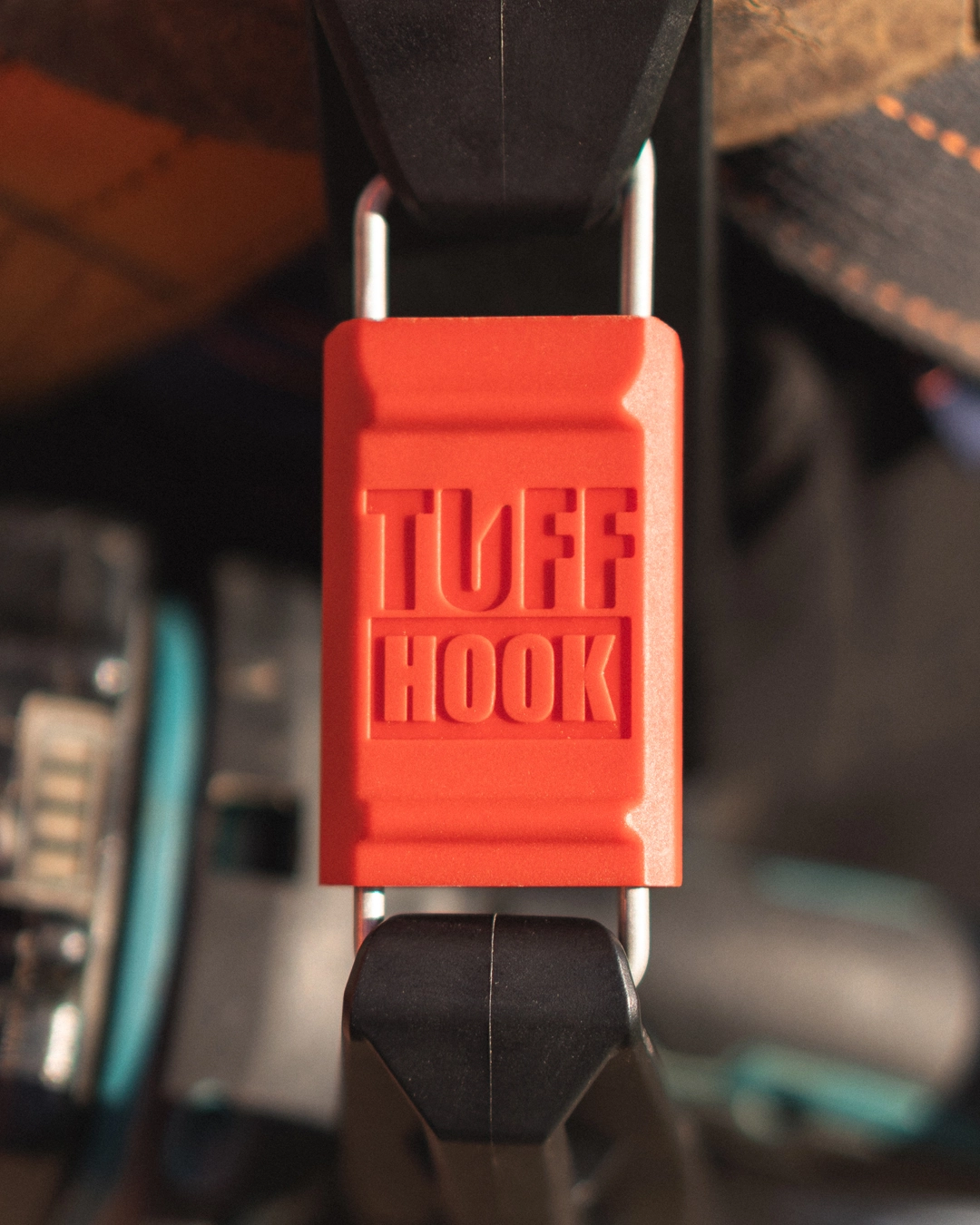
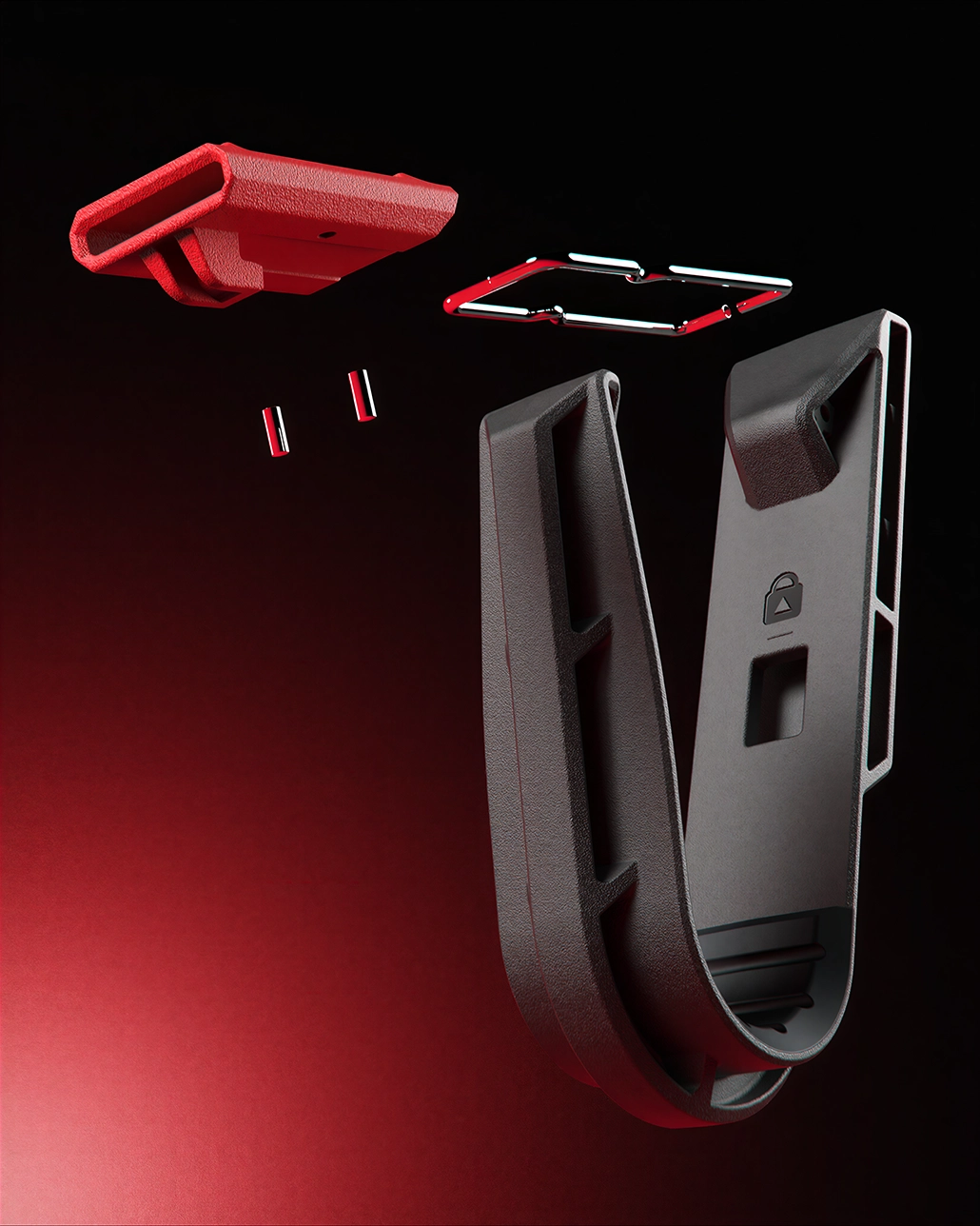
Once satisfied with the quick draw mechanism, our attention turned to how the slider was held on the gate, running further rounds of design and prototyping to make the connection as robust as possible. Getting the fit right was just as important as getting it strong. We refined the fit between the slider and gate allowing it to move smoothly and satisfyingly along the gate, without slamming or rattling while the wearer is moving.
Throughout the process, we kept Jamie closely involved. 3D prints went back and forth regularly, giving him the chance to get hands-on with the design, provide insights from the perspective of a target user and stay informed at every major decision point.
Once Jamie and our design team were fully satisfied with the interaction elements, we sent CAD data to our suppliers in China for sampling rounds, fine-tuning the fit and interaction of components to make sure everything felt right and would support a smooth fulfilment process.
Alongside this, we reviewed a range of materials with both Jamie and our factory partners, putting samples from the factory through a series of destructive tests until we landed on a result that was truly resilient to the forces we could throw at it. The final material was a 30% glass filled PA66 nylon, chosen for the strength and durability the product demands.
We identified the key design features worth highlighting and used them to develop a high-impact packaging design for Tuff Hook™ that was closely tied to the brand identity and aligned with market expectations. We also optimised the packaging structure for easy fulfilment, ensuring it was ready for efficient handling on online marketplaces.
To take a design into manufacture, every detail needs to be considered: materials, colours, finishes, tolerances, fit and assembly.
For the Tuff Hook™ , a product made up of just five components, it’s these details that make the difference.
At Centreline, we have a deep understanding of the manufacturing process, having taken hundreds of physical products from design through to manufacture and delivery. That experience shaped how we approached the Tuff Hook™ , with each component designed not only to perform its function, but to be efficient to manufacture.
The production mould tools were deliberately kept simple through the design of each individual part. Where possible, we minimised the use of sliding cores and designed components around single or double impressions. In practice, this means fewer moving parts within the mould tool, helping to keep manufacturing costs under control.
The main body of the Tuff Hook™ also incorporated a TPE overmould. This created a soft, positive contact point for power tools to sit against, protecting the tool while keeping it securely positioned. The TPE was moulded as a secondary process, becoming an integral part of the finished component rather than a removable insert.
Fit and feel were also carefully considered throughout the design. Every component was thoroughly specified so that the mould tools could achieve not just the required geometry, but the experience of using the finished product.
Samples were a critical part of this process. Initial parts produced from the mould tools were examined, tested and refined through a series of iterations until the final sample was approved. That approved sample then became the benchmark; used by both Centreline and the manufacturing partner to check that future production consistently meets the required standard.
It was this attention to detail, from component design through to production, that helped turn a well-engineered product into a successful manufactured one.
Take a look at the Tuff Hook™ for yourself